What a $200 starter kit actually gets your family
November 10, 2026 · 6 min read · Budget
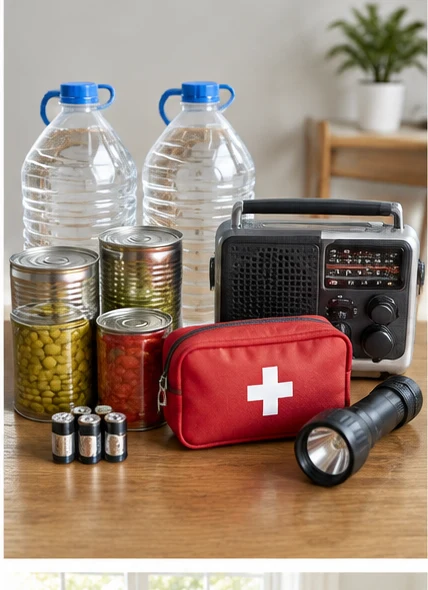
You do not need four thousand dollars to be prepared. Two hundred dollars, spent in the right order, covers the things that actually get used in the first three days of an outage: water, light, power, information, and a first aid kit.
Here is the list, roughly what each item costs, and what to leave out until later.
Water: about $60
Four stackable five-gallon containers, a case of purification tablets, and one personal filter straw per family member. That is a week of drinking water for a family of four, plus a way to make questionable water safe.
Skip the expensive filtration system at this stage. A gravity filter is the right next purchase, but it is a hundred-dollar item and the tablets cover you until then.
Light and power: about $60
A rechargeable headlamp for each person, a lantern for the kitchen table, and a solar power bank for the phones. Rechargeable batteries and a small charger round it out.
This is the category people under-buy and then regret. A dark house with a dead phone is the version of an outage that frightens children.
Information: about $40
A hand-crank radio with NOAA weather bands is the single most useful information device a household can own, because it works with no internet, no cell network, and no batteries from a store.
Add one printed map of your county and a printed first-aid or survival reference. Paper is the reference that never goes down.
First aid and heat: about $40
A proper first aid kit, not the one in the car door. Then a wool blanket per person, which keeps you warm even damp and doubles as a ground cover.
Fire starting and a lighter or two belong in this budget too. Fire is warmth, cooked food, and boiled water in one item.
What to skip, and what to add next
Skip the freeze-dried food buckets, the solar generator, and the fancy knives until the basics above are in the house. Those are excellent purchases in the wrong order.
The next hundred dollars should be a gravity water filter and a small power station. The hundred after that is a camp stove and fuel. Then you are genuinely ready for a week.
Gear mentioned here
Links to Amazon use our affiliate tag. As an Amazon Associate I earn from qualifying purchases.
- Stackable water containers →
A week of drinking water for a family of four, and the first thing to buy.
As an Amazon Associate I earn from qualifying purchases.
- Water purification tablets →
The cheap backup layer that makes questionable water safe until you can filter it.
As an Amazon Associate I earn from qualifying purchases.
- Rechargeable headlamps and a lantern →
Light for every person and for the table, on batteries you refill instead of replace.
As an Amazon Associate I earn from qualifying purchases.
- Solar power bank →
Keeps phones and radios alive for days with no wall outlet.
As an Amazon Associate I earn from qualifying purchases.
- Hand-crank emergency radio →
News and weather with no internet, no cell network, and no store-bought batteries.
As an Amazon Associate I earn from qualifying purchases.
- Comprehensive first aid kit →
The one item you will be glad you bought on the first day, not the fifth.
As an Amazon Associate I earn from qualifying purchases.
- Wool blankets →
Warm even when damp, and useful as a ground cover or a shelter layer.
As an Amazon Associate I earn from qualifying purchases.
- Fire starting kit →
Fire means warmth, cooked food, and boiled water, and it works when matches are wet.
As an Amazon Associate I earn from qualifying purchases.
Two hundred dollars in the right order beats a thousand in the wrong one. Buy the water and the light first, and the rest of the list can wait for next month's budget.