Growing food your kids will actually eat
November 11, 2026 · 7 min read · Kids
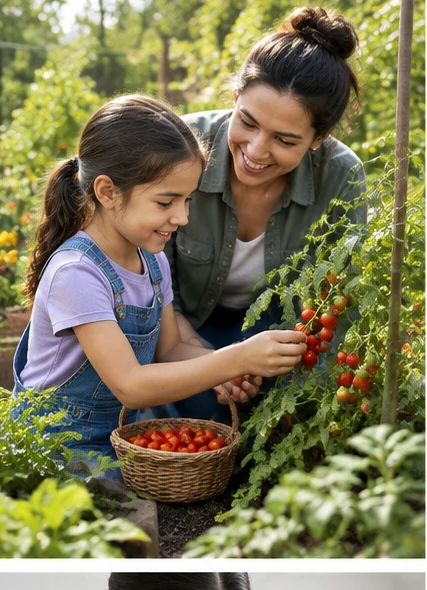
A garden is the most reliable way to get a child to eat a vegetable, and it is the most reliable way to teach a family where food comes from. Both of those matter more than the yield.
The trick is choosing crops that give a result quickly and taste good enough that a child will ask for seconds. Here is the short list and the setup.
Start with crops that answer back
Radishes, lettuce, spinach, green beans, snap peas, and cherry tomatoes all produce in weeks rather than months. A child who plants something and eats it a month later has learned the lesson completely.
Potatoes, squash, and zucchini are the beginner crops that feed a household. They forgive inconsistent watering and they produce more than you can eat, which is the point.
Build the bed, then hand it over
A raised bed warms faster, drains better, and needs less weeding than a ground plot. Galvanized or cedar beds last for years and are the one purchase that makes a garden feel permanent.
Give your child a bed or a section that is theirs alone, with tools that fit their hands. A child who owns the plot does the work without being asked.
Start seeds indoors for a head start
A seed starter kit with a small grow light gets crops going weeks before the last frost, and it extends the growing season at both ends. It also gives the family something to tend on a rainy day.
An heirloom seed vault is the long game: open-pollinated seeds you can save from each harvest, so the garden feeds you for years rather than one season.
Make the harvest the routine
Send the child to pick dinner. That single habit turns a garden from a hobby into a household job, and it makes the vegetables taste better because they helped.
Add a nature journal and a field guide and the garden becomes a study too: insects, birds, weather, and which plants the bugs prefer.
Preserve what you cannot eat
A pressure canner turns a summer of tomatoes and beans into a winter pantry with no refrigeration. It is the skill that closes the loop from seed to shelf.
Start with one batch. A child who helps can a jar of sauce will remember it, and the jar will be gone by December.
Gear mentioned here
Links to Amazon use our affiliate tag. As an Amazon Associate I earn from qualifying purchases.
- Raised garden bed →
Warms fast, drains well, and needs less weeding — the bed that makes a garden feel permanent.
As an Amazon Associate I earn from qualifying purchases.
- Garden tools and grow kits for kids →
Child-sized gloves, trowels, and fast-sprouting seeds give a result in days.
As an Amazon Associate I earn from qualifying purchases.
- Seed starter kit with grow lights →
Gets crops started weeks early and gives the family something to tend on a rainy day.
As an Amazon Associate I earn from qualifying purchases.
- Heirloom seed vault →
Open-pollinated seeds you can save each season, so the garden feeds you for years.
As an Amazon Associate I earn from qualifying purchases.
- Pressure canner →
Turns a summer harvest into a winter pantry with no refrigeration needed.
As an Amazon Associate I earn from qualifying purchases.
- Nature journal and field guides →
Turns the garden into a study in insects, birds, and weather.
As an Amazon Associate I earn from qualifying purchases.
Pick three fast crops, build one bed, and hand a child the watering can. That is the whole first season, and it teaches more than any screen in the house.